Hey,
In my infinite boredom borderlining insanity, I thought I'd educate some peeps about Genetics.
You already know everything about Genetics? Then feel free to either leave or desperately try to find falsehoods.
We all know the term Deoxyribonucleic acid (If you had English that is), but little people actually know why it's called Deoxyribonucleic acid.
Well Ribose sugar has three hydroxyl groups (-OH) on it. DNA is called "deoxyribose" because it only has two of the hydroxyl groups that ribose does. If you don't understand what this all means, you better go back to middle school.
Now what exactly does DNA (Like that Acronym? Oh yes I love it!) do? Well you see.. DNA has 4 different bases. HAH gotcha! DNA has 7 different bases. Wanna know why? Here's a list of them and how they occur in DNA:
Adenine: Is the complimentary base to thymine, it is a so-called purine because it has a double-ring structure.
Thymine: Is the complimentary base to adenine. It is a so-called pyrimidine because it has a single-ring structure.
Guanine: Is the complimentary base to cytosine. It is a purine.
Cytosine: Is the complimentary base to guanine. It is a pyrimidine.
Uracil: Now it gets complicated.. Why would Uracil be found in DNA, when most of us learnt in school that it only appears in RNA, replacing thymine?
That is due to a process called deamination, in which cytosine and water react to form Uracil and this Uracil in the DNA forms harmful U - G bonds. At least four different human DNA glycosylase can remove Uracil. Uracil is a pyrimidine btw.
Xanthine: Most of you probably didn't even hear of Xanthine. Xanthine is produced by deamination of guanine and blablabla you know the drill it's a frickin' purine
Hypoxanthine: HYPER.. Oh no.. It's actually not that cool.. It's only Hypoxanthine, a purine that is synthesized by the deamination of adenine.
NOW ISN'T THAT INTERESTING?
Well okay.. Then we now come to protein synthesis!
TRANSCRIPTION:
Transcription is the process in which RNA Polymerase comes by, copies your DNA-strand to a pre-mRNA strand and stuff happens inbetween which is too complicated for most people that read this.
But I'm gonna tell you anyway. M-RNA consists of a Cap, the genetic informaion and the Poly-A-tail. Here's a diagram of RNA:
CAPINTERESTINGSTUFFABUUUUUUUUUUNCHOFADENINEMOLECULES
This is very accurate. The cap in the mRNA later serves as an attachment point for the ribosome. The Poly-A-tail is needed, because there are enzymes in the cytoplasm, which attack the mRNA and eat away the Poly-A-tail... And we don't want that happening too quickly, because then you're going to end up with some very unfriendly proteins that will slowly kill u in ur sleep.
But the interesting stuff isn't processed yet. It needs to be cut up in a process called splicing, in which Introns are removed and Exons remain. What are those things? Google it because I don't have the time to explain it. You know I'm writing this at 11PM right?
The mRNA then GTFO of the nucleus and plunges into the cytoplasm, only to be terribly molested by a ribosome that gets some tRNA, rips the beloved bond between the tRNA and an amino acid apart and forms a Polypeptide chain.
You want specifics? Well no. Because I'm not going to tell you how tRNA is also synthesized by another RNA Polymerase and how the ribosome is actually rRNA, which was spliced and then had 2 parts and that's why the ribosome has a small and a large part, and how the ribosome has an E, a P and an A section where the tRNA comes, looks if the Anti-codon and Codon match and then leaves it's amino acid, or how rRNA is created in the nucleolus a big bubbly thing in the nucleus.
I'm not going to tell you all of that.
Then you end up with a protein like Hemoglobin. Unless you have sickle cell anemia and your blood cells look like this:
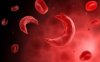
Then you should probably go and see a doctor.
More about the structure of the DNA cuz that's what middle school's about:
It's basically a double helix of nucleotides, which contains a deoxyribosesugar (5-carbon-sugar), one of 4 (HA 7!) bases and a phosphate group.
I didn't even tell you about ribonucleic acid yet! Actually I did.. mRNA for example.. and tRNA and rRNA, why don't you people listen? The only difference is the fricking sugar and Uracil instead of cytosine. And the other stuff I've already mentioned.
Do you want to know about Evolution next? If yes, please leave a comment so I can ignore the feedback and make the Thread anyways.
Sincerely,
Adrian the biology professor
In my infinite boredom borderlining insanity, I thought I'd educate some peeps about Genetics.
You already know everything about Genetics? Then feel free to either leave or desperately try to find falsehoods.
We all know the term Deoxyribonucleic acid (If you had English that is), but little people actually know why it's called Deoxyribonucleic acid.
Well Ribose sugar has three hydroxyl groups (-OH) on it. DNA is called "deoxyribose" because it only has two of the hydroxyl groups that ribose does. If you don't understand what this all means, you better go back to middle school.
Now what exactly does DNA (Like that Acronym? Oh yes I love it!) do? Well you see.. DNA has 4 different bases. HAH gotcha! DNA has 7 different bases. Wanna know why? Here's a list of them and how they occur in DNA:
Adenine: Is the complimentary base to thymine, it is a so-called purine because it has a double-ring structure.
Thymine: Is the complimentary base to adenine. It is a so-called pyrimidine because it has a single-ring structure.
Guanine: Is the complimentary base to cytosine. It is a purine.
Cytosine: Is the complimentary base to guanine. It is a pyrimidine.
Uracil: Now it gets complicated.. Why would Uracil be found in DNA, when most of us learnt in school that it only appears in RNA, replacing thymine?
That is due to a process called deamination, in which cytosine and water react to form Uracil and this Uracil in the DNA forms harmful U - G bonds. At least four different human DNA glycosylase can remove Uracil. Uracil is a pyrimidine btw.
Xanthine: Most of you probably didn't even hear of Xanthine. Xanthine is produced by deamination of guanine and blablabla you know the drill it's a frickin' purine
Hypoxanthine: HYPER.. Oh no.. It's actually not that cool.. It's only Hypoxanthine, a purine that is synthesized by the deamination of adenine.
NOW ISN'T THAT INTERESTING?
Well okay.. Then we now come to protein synthesis!
TRANSCRIPTION:
Transcription is the process in which RNA Polymerase comes by, copies your DNA-strand to a pre-mRNA strand and stuff happens inbetween which is too complicated for most people that read this.
But I'm gonna tell you anyway. M-RNA consists of a Cap, the genetic informaion and the Poly-A-tail. Here's a diagram of RNA:
CAPINTERESTINGSTUFFABUUUUUUUUUUNCHOFADENINEMOLECULES
This is very accurate. The cap in the mRNA later serves as an attachment point for the ribosome. The Poly-A-tail is needed, because there are enzymes in the cytoplasm, which attack the mRNA and eat away the Poly-A-tail... And we don't want that happening too quickly, because then you're going to end up with some very unfriendly proteins that will slowly kill u in ur sleep.
But the interesting stuff isn't processed yet. It needs to be cut up in a process called splicing, in which Introns are removed and Exons remain. What are those things? Google it because I don't have the time to explain it. You know I'm writing this at 11PM right?
The mRNA then GTFO of the nucleus and plunges into the cytoplasm, only to be terribly molested by a ribosome that gets some tRNA, rips the beloved bond between the tRNA and an amino acid apart and forms a Polypeptide chain.
You want specifics? Well no. Because I'm not going to tell you how tRNA is also synthesized by another RNA Polymerase and how the ribosome is actually rRNA, which was spliced and then had 2 parts and that's why the ribosome has a small and a large part, and how the ribosome has an E, a P and an A section where the tRNA comes, looks if the Anti-codon and Codon match and then leaves it's amino acid, or how rRNA is created in the nucleolus a big bubbly thing in the nucleus.
I'm not going to tell you all of that.
Then you end up with a protein like Hemoglobin. Unless you have sickle cell anemia and your blood cells look like this:
Then you should probably go and see a doctor.
More about the structure of the DNA cuz that's what middle school's about:
It's basically a double helix of nucleotides, which contains a deoxyribosesugar (5-carbon-sugar), one of 4 (HA 7!) bases and a phosphate group.
I didn't even tell you about ribonucleic acid yet! Actually I did.. mRNA for example.. and tRNA and rRNA, why don't you people listen? The only difference is the fricking sugar and Uracil instead of cytosine. And the other stuff I've already mentioned.
Do you want to know about Evolution next? If yes, please leave a comment so I can ignore the feedback and make the Thread anyways.
Sincerely,
Adrian the biology professor
Zuletzt bearbeitet: